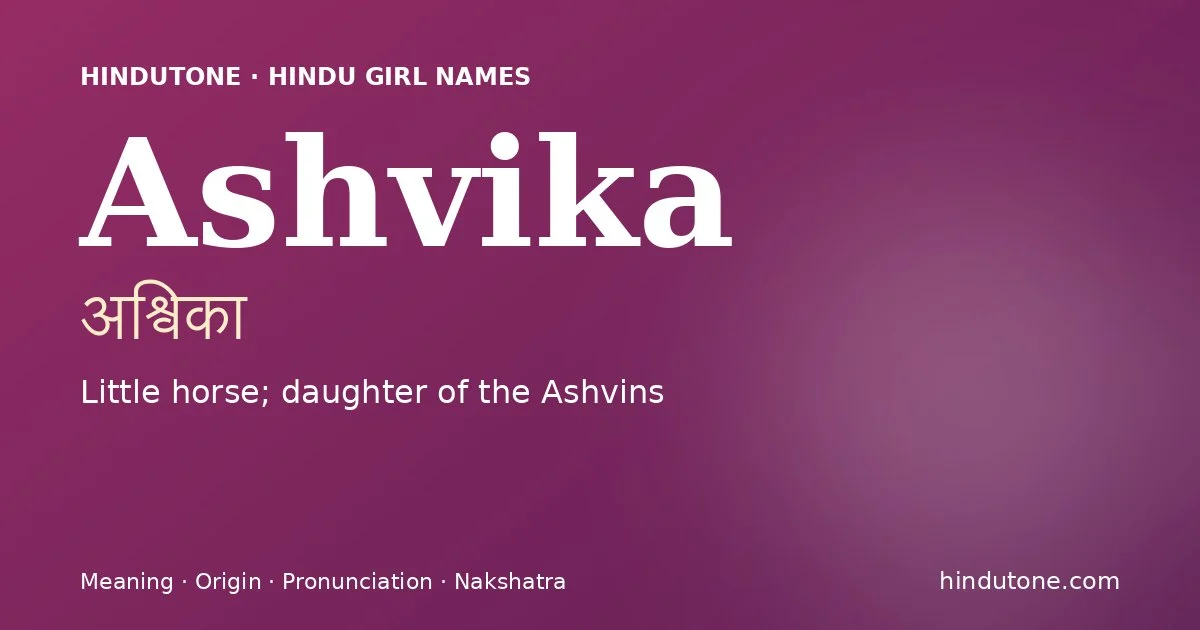
అశ్వికా — సంస్కృత మూలం గల హిందూ అమ్మాయి పేరు, అర్థం "చిన్న గుర్రం; అశ్వినీ దేవతల కుమార్తె".
అశ్వికా అంటే ఏమిటి?
"అశ్వికా" అనేది సంస్కృత మూలం గల హిందూ అమ్మాయి పేరు. అర్థం: చిన్న గుర్రం; అశ్వినీ దేవతల కుమార్తె.
మూలం & సంస్కృత లిపి
సంస్కృతం: अश्विका · తెలుగు: అశ్వికా.
అశ్వికా ఉచ్చారణ
అశ్వికా · Ashvika
అశ్వికా పేరును ఎందుకు ఎంచుకుంటారు
చిన్న గుర్రం; అశ్వినీ దేవతల కుమార్తె — శుభప్రదమైన అర్థం.
కాలాతీత, సంస్కృత మూలం గల హిందూ పేరు.
అశ్వికా — పేరు వివరాలు
- అర్థం
- చిన్న గుర్రం; అశ్వినీ దేవతల కుమార్తె
- లింగం
- హిందూ అమ్మాయి పేరు
- నక్షత్రం
- కృత్తిక
- రాశి
- మేషం (Mesha)
- సంఖ్యాశాస్త్రం
- 1
తరచుగా అడిగే ప్రశ్నలు
అశ్వికా పేరుకు అర్థం ఏమిటి?
అశ్వికా సంస్కృత మూలం గల హిందూ అమ్మాయి పేరు; దీని అర్థం “చిన్న గుర్రం; అశ్వినీ దేవతల కుమార్తె”.
అశ్వికా అబ్బాయి పేరా, అమ్మాయి పేరా?
అశ్వికా సంప్రదాయంగా హిందూ అమ్మాయి పేరు.
అశ్వికా పేరు ఏ నక్షత్రం, రాశికి సరిపోతుంది?
వైదిక నామకరణ మొదటి అక్షర నియమం ప్రకారం అశ్వికా పేరు కృత్తిక నక్షత్రానికి, మేషం (Mesha) రాశికి చెందుతుంది.
అశ్వికా పేరు సంఖ్య (న్యూమరాలజీ) ఎంత?
కాల్డియన్ సంఖ్యాశాస్త్రం ప్రకారం అశ్వికా పేరు సంఖ్య 1.
Explore more: Krittika nakshatra names · Mesha rashi names · Hindu girl names with A · All Hindu names A–Z