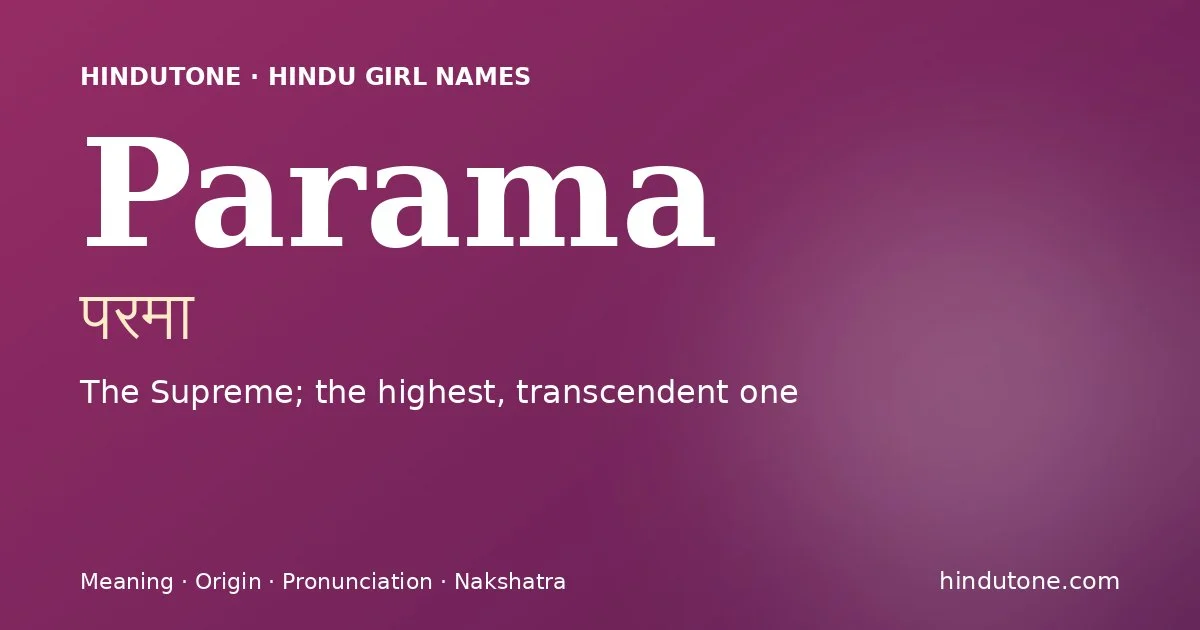
పరమా — సంస్కృత మూలం గల హిందూ అమ్మాయి పేరు, అర్థం "పరమ; సర్వోన్నతమైనది, అతీతమైనది".
పరమా అంటే ఏమిటి?
"పరమా" అనేది సంస్కృత మూలం గల హిందూ అమ్మాయి పేరు. అర్థం: పరమ; సర్వోన్నతమైనది, అతీతమైనది.
మూలం & సంస్కృత లిపి
సంస్కృతం: परमा · తెలుగు: పరమా.
పరమా ఉచ్చారణ
పరమా · Parama
పరమా పేరును ఎందుకు ఎంచుకుంటారు
పరమ; సర్వోన్నతమైనది, అతీతమైనది — శుభప్రదమైన అర్థం.
కాలాతీత, సంస్కృత మూలం గల హిందూ పేరు.
పరమా — పేరు వివరాలు
- అర్థం
- పరమ; సర్వోన్నతమైనది, అతీతమైనది
- లింగం
- హిందూ అమ్మాయి పేరు
- నక్షత్రం
- ఉత్తర (ఉత్తర ఫల్గుణి)
- రాశి
- కన్య (Kanya)
- సంఖ్యాశాస్త్రం
- 8
తరచుగా అడిగే ప్రశ్నలు
పరమా పేరుకు అర్థం ఏమిటి?
పరమా సంస్కృత మూలం గల హిందూ అమ్మాయి పేరు; దీని అర్థం “పరమ; సర్వోన్నతమైనది, అతీతమైనది”.
పరమా అబ్బాయి పేరా, అమ్మాయి పేరా?
పరమా సంప్రదాయంగా హిందూ అమ్మాయి పేరు.
పరమా పేరు ఏ నక్షత్రం, రాశికి సరిపోతుంది?
వైదిక నామకరణ మొదటి అక్షర నియమం ప్రకారం పరమా పేరు ఉత్తర (ఉత్తర ఫల్గుణి) నక్షత్రానికి, కన్య (Kanya) రాశికి చెందుతుంది.
పరమా పేరు సంఖ్య (న్యూమరాలజీ) ఎంత?
కాల్డియన్ సంఖ్యాశాస్త్రం ప్రకారం పరమా పేరు సంఖ్య 8.
Explore more: Uttara Phalguni nakshatra names · Kanya rashi names · Hindu girl names with P · All Hindu names A–Z