

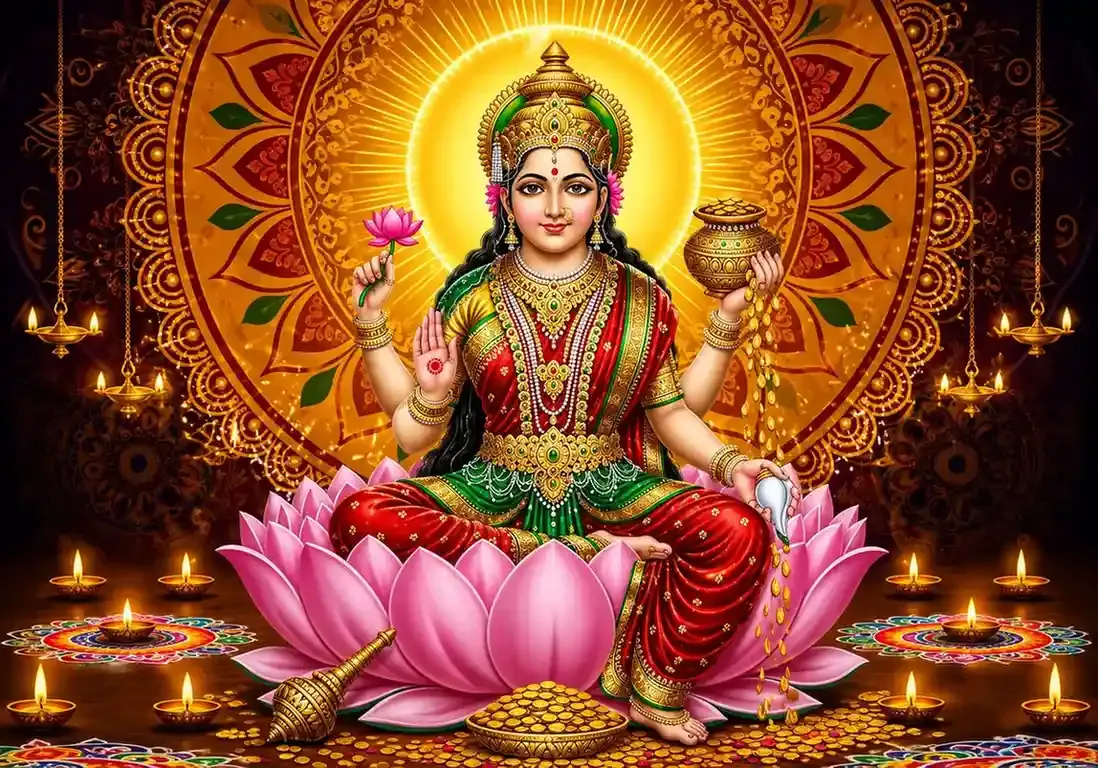

Diwali 2026 falls on Wednesday, 18 November (Lakshmi Puja). The 5-day festival runs from Dhanteras (15 Nov) through Bhai Dooj (19 Nov). Exact muhurat times for Lakshmi puja vary by city — check the muhurat calculator for your timezone.
Holi 2026 falls on Wednesday, 4 March. Holika Dahan (the bonfire night before) is Tuesday, 3 March. The festival marks the triumph of Prahlada's devotion over the rakshasi Holika and welcomes the arrival of spring.
Most Hindu festivals follow the lunar calendar (panchang) and fall on specific tithis (lunar dates) — e.g., Krishna Janmashtami on the 8th day of Krishna Paksha in Bhadrapada. Solar festivals (Sankranti, Pongal, Karthika Sankranti) follow the Sun's sign transitions. Dates shift across the Gregorian calendar each year.
Yes — North India often follows the Purnimanta calendar (month ends on full moon), South India the Amavasyanta (month ends on new moon). The same lunar event can land in different "months" by name. Most festivals are observed on the same astronomical day everywhere, with regional name variations.
Absolutely — most major festivals (Diwali, Holi, Navratri, Hanuman Jayanti) have well-documented home puja vidhis. HinduTone publishes step-by-step home guides for each major festival. Specialised rituals (yajnas, fire ceremonies, name-giving) traditionally need a trained priest.
